
Dino Dana Field Guide: An Overview
Dino Dana’s Field Guide is a comprehensive resource, acting as a prehistoric animal encyclopedia for young explorers.
It’s packed with dinosaur facts,
fossil information, and details about prehistoric life,
perfect for budding paleontologists!
Dino Dana bursts onto the scene as a vibrant and scientifically-grounded world, centered around a young girl named Dana who possesses a remarkable ability. She can visualize dinosaurs – not just imagining them, but truly seeing them in the present day! This isn’t simply fantasy; Dana approaches her encounters with dinosaurs through the lens of a dedicated paleontologist.
The Dino Dana Field Guide series, including volumes focused on dinosaurs and pterosaurs, extends this universe into a tangible learning experience. These books aren’t just about identifying dinosaurs; they’re about understanding their world, their behaviors, and the science behind their existence. They aim to inspire curiosity and a love for paleontology in young readers.
The core of the Dino Dana universe lies in blending imaginative play with genuine scientific inquiry. It’s a space where kids can explore prehistoric life, ask questions, and develop a deeper appreciation for the natural world, all while having fun with a relatable and enthusiastic role model.
What is a Field Guide?
A Field Guide, traditionally, is a portable reference book designed to help identify plants, animals, and other natural phenomena encountered in the field – essentially, outdoors! However, the Dino Dana Field Guide cleverly adapts this concept for a prehistoric world. It serves as a comprehensive resource for identifying and learning about dinosaurs and other creatures that roamed the Earth millions of years ago.
Unlike a typical nature guide, this field guide delves into a lost world, relying on fossil evidence and paleontological research to reconstruct the lives of these magnificent beings. It’s packed with facts, illustrations, and details about everything from sauropods to pterosaurs.
The Dino Dana version isn’t just about identification; it’s about understanding ecosystems, behaviors, and the scientific process of uncovering the mysteries of the past. It’s a tool for exploration, sparking curiosity and fostering a love for paleontology in young minds.
Target Audience: Young Paleontologists
The Dino Dana Field Guide is specifically designed for young, aspiring paleontologists – children with a passion for dinosaurs and prehistoric life! It’s crafted to be accessible and engaging for readers who are captivated by the world of fossils and ancient creatures.
The books cater to those “readers of books about dinosaurs for kids,” offering a blend of scientific information and imaginative storytelling. It’s perfect for children who enjoy learning about different species, their habitats, and how paleontologists uncover their secrets.
The guide’s format, filled with facts and illustrations, encourages independent learning and exploration. It aims to inspire a deeper understanding of paleontology, fostering scientific curiosity and a lifelong love for the natural world. It’s a fantastic resource for both classroom learning and independent study, nurturing the next generation of dinosaur experts!

Key Dinosaur Groups Featured
Dino Dana Field Guides explore major dinosaur groups like Sauropods, Theropods, Ornithopods, and Ceratopsians.
Each group’s unique characteristics
and fascinating adaptations are highlighted,
providing a broad overview.
Sauropods: The Gentle Giants
Sauropods, the long-necked giants of the dinosaur world, are a prominent feature within the Dino Dana Field Guide. These herbivorous dinosaurs are renowned for their immense size, making them the largest land animals to have ever existed. The guide details how sauropods, like Brachiosaurus, utilized their lengthy necks to reach high into the trees, consuming vast quantities of vegetation.

The Field Guide explores the physical adaptations of sauropods, including their pillar-like legs designed to support their massive weight and their relatively small heads. It also delves into theories about their social behavior, suggesting they may have lived in herds for protection.
Readers will discover fascinating facts about sauropod digestion, the challenges of maintaining a massive body temperature, and the environments they inhabited during the Mesozoic Era. The guide emphasizes the importance of understanding these gentle giants to comprehend the prehistoric world.
Theropods: The Predatory Dinosaurs
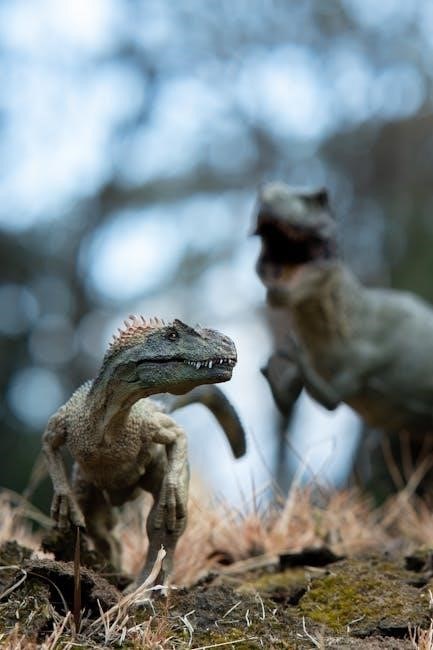
Theropods, the bipedal, mostly carnivorous dinosaurs, take center stage in the Dino Dana Field Guide as formidable predators. This section details the diverse range of theropods, from the massive Spinosaurus – uniquely adapted for a semi-aquatic lifestyle – to smaller, agile hunters. The guide highlights their key characteristics: sharp teeth, powerful claws, and keen senses.
The Field Guide explores the hunting strategies employed by theropods, examining evidence of pack behavior in some species and the solitary nature of others. It delves into their skeletal structure, explaining how features like hollow bones contributed to their speed and agility.
Readers will learn about the evolutionary links between theropods and modern birds, understanding how these ancient predators ultimately gave rise to avian life. The guide emphasizes the crucial role theropods played in prehistoric ecosystems, maintaining balance through predation.
Ornithopods: The Beaked Herbivores
Ornithopods, characterized by their bird-like hips and beaks, are presented in the Dino Dana Field Guide as a diverse group of herbivorous dinosaurs. This section details their specialized adaptations for plant-eating, focusing on their complex dental batteries designed for grinding tough vegetation. The guide showcases a variety of ornithopods, from smaller, agile species to larger, more robust forms.
The Field Guide explores the social behaviors of ornithopods, highlighting evidence of herding and potential migration patterns. It examines their digestive systems, explaining how they efficiently processed plant matter. Illustrations demonstrate the evolution of their beaks and the development of sophisticated chewing mechanisms.
Readers will discover how ornithopods thrived in various prehistoric environments, playing a vital role in shaping plant communities. The guide emphasizes their importance as a food source for larger predators and their contribution to seed dispersal.
Ceratopsians: The Horned Dinosaurs
Ceratopsians, instantly recognizable by their prominent horns and frills, are a captivating focus within the Dino Dana Field Guide. This section delves into the diverse array of these herbivorous dinosaurs, examining the function of their cranial ornamentation – from defense against predators to species recognition and display.
The guide meticulously details the anatomy of ceratopsians, highlighting the robust build and powerful limbs that supported their large bodies. It explores the evolution of their frills, showcasing variations in shape and size across different species. Kosmoceratops, with its astonishing fifteen horns, receives particular attention.
Readers will learn about the ceratopsian diet, focusing on their ability to shear through tough vegetation with their beak-like mouths. The Field Guide also investigates their social behaviors, suggesting potential herding habits and parental care strategies, bringing these magnificent creatures to life.
Specific Dinosaurs Highlighted
Dino Dana’s Field Guide spotlights incredible dinosaurs like Brachiosaurus, the tallest known species, and Spinosaurus, uniquely adapted for swimming.
Kosmoceratops and Triceratops are also featured!
Brachiosaurus: The Tallest Dinosaur
Brachiosaurus truly lived up to its name, meaning “arm lizard,” referencing its remarkably long front legs. This colossal sauropod is celebrated as one of the tallest dinosaurs ever discovered, reaching heights estimated between 40 to 50 feet – imagine a four-story building!
Dino Dana: Dino Field Guide delves into the fascinating details of this gentle giant. Its immense size was supported by a robust, pillar-like legs and a powerful musculoskeletal system. Brachiosaurus was a herbivore, using its long neck to reach the highest branches of trees, consuming vast quantities of vegetation to fuel its massive body.
The field guide explores how paleontologists have pieced together the story of Brachiosaurus through fossil discoveries. These fossils reveal clues about its anatomy, diet, and potential behavior. Learning about Brachiosaurus inspires awe and wonder, showcasing the incredible diversity of life that once roamed our planet. It’s a prime example of the magnificent creatures detailed within the Dino Dana universe!
Spinosaurus: The Swimming Dinosaur
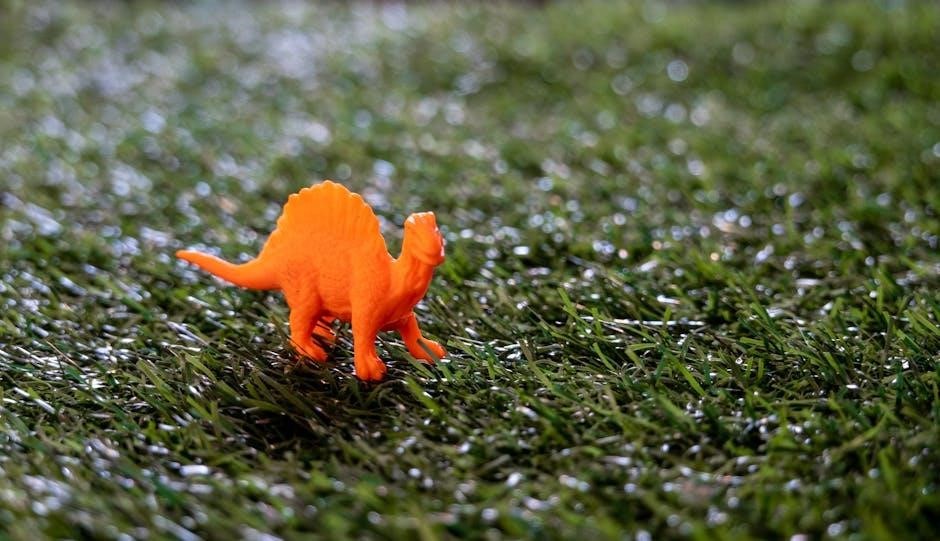
Spinosaurus stands out as a truly unique dinosaur, distinguished by the large sail on its back, formed by elongated neural spines. But what truly sets it apart is its adaptation to a semi-aquatic lifestyle – making it the only known dinosaur to spend much of its time swimming!
Dino Dana: Dino Field Guide highlights the evidence supporting this fascinating theory. Its dense bones, paddle-like feet, and crocodile-like snout suggest Spinosaurus was well-suited for life in the water. It likely hunted large fish and other aquatic creatures in the rivers and swamps of North Africa during the Cretaceous period.
The field guide details how paleontologists continue to uncover new information about Spinosaurus, refining our understanding of its anatomy and behavior. This dinosaur challenges traditional perceptions of dinosaurs as solely land-dwelling creatures, showcasing the incredible adaptability of prehistoric life. Exploring Spinosaurus within Dino Dana sparks curiosity about the diverse environments dinosaurs inhabited.
Kosmoceratops: The Fifteen-Horned Dinosaur
Kosmoceratops is arguably one of the most extravagantly ornamented dinosaurs ever discovered, earning it the nickname “the fifteen-horned dinosaur.” Dino Dana: Dino Field Guide vividly illustrates this ceratopsian’s remarkable skull, adorned with an astonishing array of horns and bony protrusions.
Unlike the more familiar Triceratops, Kosmoceratops possessed a complex arrangement of horns – one above each eye, one on the nose, and a further fifteen horns and horn-like structures extending from the rear frill. The purpose of these elaborate ornaments remains a topic of debate among paleontologists, with theories ranging from species recognition to display during mating rituals.

The field guide emphasizes that Kosmoceratops lived during the Late Cretaceous period in what is now Utah. Studying this dinosaur provides valuable insights into the evolutionary pressures that drove the development of such elaborate cranial ornamentation. Dino Dana encourages young readers to consider the possible functions of these unique features.
Triceratops: The Three-Horned Face
Triceratops is one of the most iconic dinosaurs, instantly recognizable by its large bony frill and three prominent horns. Dino Dana: Dino Field Guide presents this herbivore as a formidable, yet peaceful, giant of the Late Cretaceous period. The guide details how Triceratops utilized its horns for defense against predators like Tyrannosaurus rex, and potentially for display during mating seasons.
The field guide highlights the Triceratops’ robust build and powerful legs, indicating a life spent grazing on tough vegetation. Its beak-like mouth was perfectly adapted for shearing through plants, and dental batteries allowed for efficient processing of fibrous material. Dino Dana emphasizes the importance of understanding an animal’s anatomy to infer its lifestyle.
Fossil discoveries reveal Triceratops lived in herds, suggesting a social structure. The Dino Field Guide encourages young paleontologists to imagine what life was like for these magnificent creatures, roaming the ancient landscapes.
Pterosaurs and Other Prehistoric Creatures
Dino Dana’s Field Guide expands beyond dinosaurs, exploring flying reptiles like pterosaurs and other prehistoric creatures.
Discover fascinating facts
about these amazing animals!
Pterosaurs: Masters of the Sky
Pterosaurs truly reigned as the masters of the prehistoric skies, and Dino Dana’s Field Guide dives deep into their world! These weren’t dinosaurs, but flying reptiles that coexisted with them, showcasing incredible diversity in size and shape. The guide details how pterosaurs developed flight, utilizing a unique wing structure formed by a membrane stretched from an elongated finger to their bodies.
You’ll learn about their different lifestyles – some were fish-eaters soaring over ancient oceans, while others hunted inland. The book explores the various types of pterosaurs, highlighting their adaptations for flight, feeding, and survival. It’s a captivating look at these often-overlooked prehistoric creatures, bringing their aerial prowess to life for young readers.
Dino Dana’s Field Guide emphasizes the importance of understanding pterosaurs as a distinct group, separate from dinosaurs, yet equally fascinating components of the prehistoric ecosystem.
Pterodactylus: A Common Pterosaur
Pterodactylus is often the first pterosaur that comes to mind, and Dino Dana’s Field Guide provides a detailed look at this relatively common, yet remarkable, flying reptile. The guide explains that while frequently depicted, the popular image of Pterodactylus is often simplified. It clarifies that this pterosaur lived during the late Jurassic period, possessing a wingspan reaching up to 3.3 feet.
Dino Dana’s Field Guide highlights its distinctive features, including a short tail and a prominent crest on its head, likely used for display or balance. The book explores its diet, primarily consisting of fish caught from the ancient seas. It also delves into the fossil evidence that allows paleontologists to reconstruct its life and behavior.
Through engaging illustrations and accessible language, the guide makes Pterodactylus a relatable and fascinating subject for young dinosaur enthusiasts.
Pteranodon: The Crested Flyer
Pteranodon, as detailed in Dino Dana’s Field Guide, is a truly iconic pterosaur, instantly recognizable by its large size and spectacular head crest. The guide emphasizes that this crest wasn’t solid bone, but supported by soft tissue, and likely played a role in visual displays, perhaps for attracting mates or establishing dominance.
Dino Dana’s Field Guide explains that Pteranodon lived during the late Cretaceous period and boasted an impressive wingspan, reaching up to 20 feet – making it one of the largest known flying reptiles! It was a skilled flyer, capable of soaring over ancient oceans in search of food, primarily fish and squid.
The book explores the fossil discoveries that have revealed much about Pteranodon’s anatomy and lifestyle, bringing this magnificent creature to life for young readers. It’s a captivating subject within the broader world of prehistoric life.
Other Prehistoric Reptiles
Dino Dana’s Field Guide doesn’t limit itself to dinosaurs and pterosaurs; it expands the prehistoric world to include a fascinating array of other reptiles! The guide highlights that the Mesozoic Era was teeming with diverse reptilian life, beyond the well-known giants.
Readers discover information about marine reptiles like plesiosaurs and mosasaurs, apex predators of the ancient seas. Dino Dana’s Field Guide details their adaptations for aquatic life, including streamlined bodies and powerful tails. It also explores early snakes and lizards, showcasing their evolutionary origins.
The book emphasizes that these reptiles occupied various ecological niches, contributing to the complexity of prehistoric ecosystems. It’s a reminder that dinosaurs were just one part of a much larger, more diverse prehistoric world, brought to life through detailed illustrations and engaging facts.
Fossil Evidence and Paleontology
Dino Dana’s Field Guide explores how paleontologists uncover the past through fossils.
It explains fossil formation,
the science of dating,
and the importance of these clues!
What are Fossils?
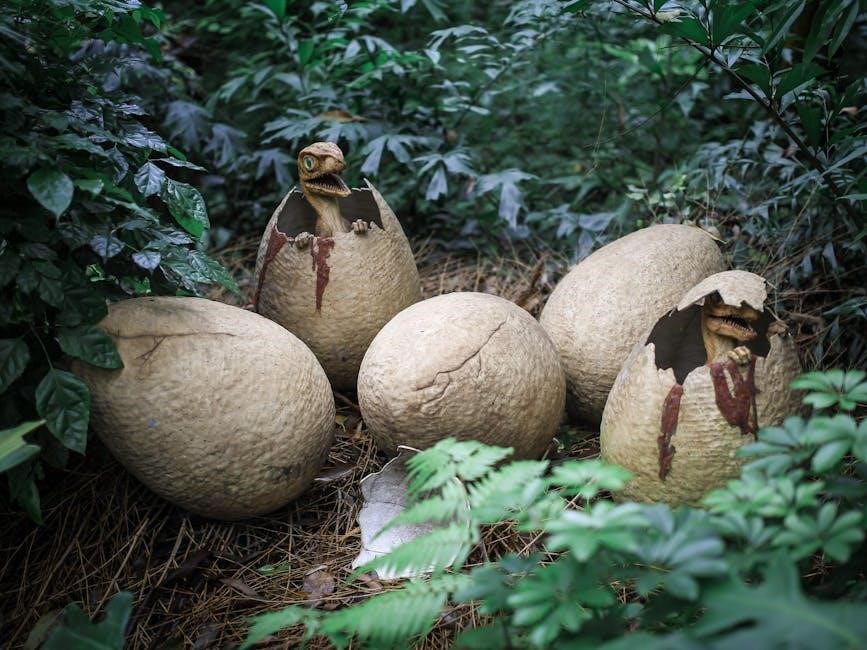
Fossils are the preserved remains or traces of ancient organisms, offering a remarkable window into prehistoric life. Dino Dana’s Field Guide expertly explains that these aren’t just dinosaur bones; they encompass a wide range of evidence. This includes footprints, impressions, and even fossilized dung – known as coprolites!
The guide details how fossils form over millions of years, typically when a plant or animal dies and is quickly covered by sediment like mud or volcanic ash. This protective layer prevents decomposition, allowing minerals to gradually replace the organic material, turning it into stone.
Dino Dana emphasizes that finding fossils is like piecing together a puzzle, providing crucial insights into the creatures that roamed the Earth long ago. The field guide highlights that fossils aren’t always complete skeletons; often, paleontologists discover fragments, requiring careful analysis and interpretation. These fragments, however, are still incredibly valuable for understanding ancient ecosystems and evolutionary history.
How Fossils are Formed
Dino Dana’s Field Guide meticulously explains the fascinating process of fossilization. It begins when a plant or animal dies and is rapidly buried under layers of sediment – think mud, sand, or volcanic ash. This quick burial is crucial, protecting the remains from scavengers and decay.
Over immense periods, pressure from overlying sediments compacts the lower layers. Simultaneously, mineral-rich water percolates through the sediment, slowly replacing the organic material with minerals like calcium carbonate or silica. This process, called mineralization, essentially turns the remains into stone.
Dino Dana illustrates that different environments favor different types of fossilization. For example, fossils are commonly found in sedimentary rock formed in ancient seabeds or riverbeds. The guide also notes that not all organisms fossilize equally well; hard parts like bones and shells are more likely to survive than soft tissues. Ultimately, fossilization is a rare event, making each discovery incredibly significant.
The Role of Paleontologists
Dino Dana’s Field Guide highlights the vital work of paleontologists – the scientists who study prehistoric life. These dedicated researchers aren’t just digging up bones; they’re detectives piecing together the history of our planet. Their work begins with careful excavation, meticulously removing fossils from the surrounding rock.
But the real work starts in the lab! Paleontologists clean, analyze, and compare fossils to understand ancient organisms’ anatomy, behavior, and evolution. They use various techniques, including comparative anatomy and geological dating, to reconstruct ancient ecosystems.
Dino Dana emphasizes that paleontologists collaborate with other scientists – geologists, biologists, and even chemists – to build a comprehensive picture of the past. They publish their findings in scientific journals and share their knowledge with the public, inspiring future generations of scientists. It’s a challenging but incredibly rewarding field!
Dating Fossils: Understanding Time
Dino Dana’s Field Guide explains that discovering a fossil is only the first step; determining its age is crucial! Paleontologists employ several methods to understand when a dinosaur or prehistoric creature lived. Relative dating uses the position of fossils within rock layers – deeper layers are generally older. However, this method isn’t precise.
Absolute dating, also known as radiometric dating, provides more accurate ages. This technique analyzes the decay of radioactive isotopes within the fossil or surrounding rocks. Different isotopes decay at known rates, acting like a natural clock.
Dino Dana illustrates how these methods help build a timeline of prehistoric life, revealing how species evolved and when extinction events occurred. Understanding geological time scales is essential for comprehending the vast history of life on Earth, and the field guide makes this complex topic accessible to young learners.

Dino Dana’s Approach to Paleontology
Dino Dana uniquely blends scientific accuracy with imaginative play, fostering curiosity.
Interactive experiences and keen observation skills are emphasized,
inspiring young minds to explore paleontology!
Blending Science and Imagination
Dino Dana masterfully bridges the gap between rigorous scientific study and the boundless realm of imagination. The series, and particularly the Dino Dana Field Guide, doesn’t shy away from presenting factual information about dinosaurs, fossils, and prehistoric life. However, it simultaneously encourages viewers and readers to actively imagine what it would be like to interact with these creatures.
This approach is crucial for engaging young learners. By allowing children to visualize themselves as paleontologists, observing dinosaurs in their natural habitats, and even transforming into the dinosaurs themselves – as Dana does in the show – the Field Guide makes paleontology accessible and exciting. It’s not just about memorizing names and dates; it’s about fostering a sense of wonder and encouraging children to ask “what if?” questions.
The Field Guide serves as a springboard for creative exploration, inspiring kids to develop their own theories, conduct their own “experiments” (through play), and ultimately, cultivate a lifelong love of science. This blend of fact and fantasy is what sets Dino Dana apart and makes it such a powerful educational tool;
Interactive Learning Experiences
The Dino Dana Field Guide isn’t simply a book to be read; it’s designed to be an interactive learning experience. Building upon the premise of the Dino Dana series, the Field Guide encourages active participation and exploration. It’s presented as a genuine field guide, inviting young readers to become paleontologists themselves.

The books are filled with detailed illustrations and fascinating facts, prompting children to observe, question, and discover. The format lends itself to “expeditions” – whether it’s researching a specific dinosaur, creating a prehistoric diorama, or even role-playing as Dana and her dinosaur companions.
Furthermore, the Field Guide complements the Dino Dana TV show, offering a tangible extension of the on-screen adventures. This multi-platform approach reinforces learning and provides multiple avenues for engagement. It’s a hands-on, immersive experience that transforms learning about dinosaurs from a passive activity into an exciting quest for knowledge.
Encouraging Scientific Curiosity
The Dino Dana Field Guide series excels at fostering scientific curiosity in young minds. It doesn’t just present facts about dinosaurs; it inspires children to ask “why” and “how.” The books are structured to encourage observation, critical thinking, and a genuine thirst for knowledge about the prehistoric world.
By presenting information in an accessible and engaging manner, the Field Guide demystifies paleontology. It shows kids that science isn’t just about memorizing names and dates, but about investigation, discovery, and forming hypotheses. The detailed descriptions and illustrations spark imagination and encourage further research.
The series’ success lies in its ability to blend entertainment with education, making learning an enjoyable adventure. It empowers young readers to become active participants in the scientific process, nurturing a lifelong love of learning and exploration. It’s a springboard for future scientific endeavors!
The Importance of Observation
Dino Dana’s Field Guide places a significant emphasis on the power of observation, a cornerstone of paleontological study. The books aren’t simply lists of dinosaur characteristics; they prompt readers to carefully examine details – from horn shapes to tooth structures and even potential skin patterns.
This focus on observation mirrors the real work of paleontologists, who meticulously analyze fossil evidence to reconstruct the lives of extinct creatures. The Field Guide encourages children to develop these same skills, teaching them to look beyond the obvious and notice subtle clues.
Detailed illustrations and descriptions are designed to stimulate visual analysis. By prompting close examination, the series cultivates a habit of mindful observation that extends beyond dinosaurs, fostering a valuable skill applicable to all areas of scientific inquiry and everyday life. It’s about seeing, truly seeing, the world around us!